Ga naar de content

Rijkskantoor De Knoop
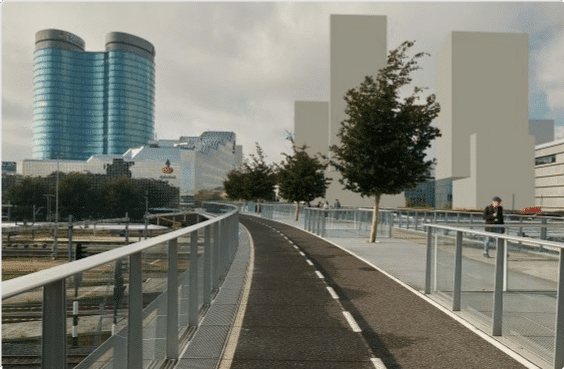
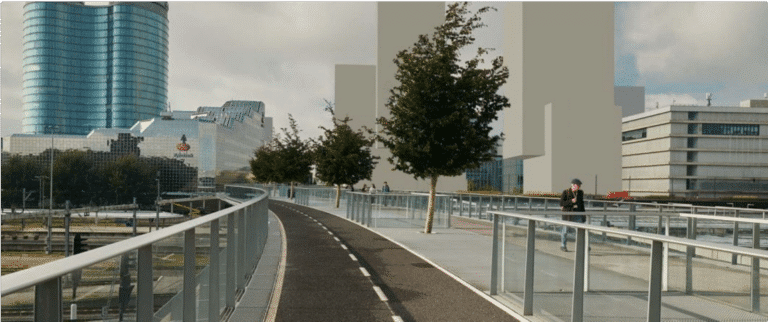
When Rijksvastgoedbedrijf (RVB) acquired the former Knoop barracks in Utrecht in 2011, it had the ambition to transform the area into a high-quality, mixed-use urban environment for working, living, and staying. In 2018, the first phase was successfully completed with the realization of a modern government office building.

Today, the RVB is working on the definition phase for the next development phases. This phase requires tough choices: about what will be built, when, and under what conditions. Choices that have direct consequences for planning, costs, and risks.

Why was BAEKEN needed?

Several strategic themes converge in the definition phase. Policy developments, area dynamics, and the divergent interests of stakeholders all influence the final scope. Themes such as mobility, energy supply, and possible residential functions influence each other and create uncertainty in terms of time and money. As long as the consequences of these choices are not explicit, the definition phase cannot be completed. The project needed additional guidance: not by dictating content, but by creating insight into the consequences of different scenarios. That is why RVB started a collaboration with Brink and BAEKEN.

The key question in this phase was clear: what exactly does the client want to have built, and what does that mean in concrete terms for schedule, costs, and risks? BAEKEN was brought in to bring structure to this decision-making process. By making choices explicit, quantifying uncertainties, and making scenarios comparable, the project team was given the basis to actually make decisions and determine the direction for the next phase.

How did we approach this project?

  1. Clear definition of needs and guiding schedule

    Together with the integrated project team, we first clearly defined which questions needed to be answered in order to complete the definition phase. For each strategic theme, such as mobility, energy, and programmatic choices, we determined what insights were needed to define realistic scopes.

    Based on this, an integrated schedule was drawn up that does more than just organize activities. The schedule shows:

    • which insights are critical for which decisions;
    • when these insights must be available;
    • where dependencies and decision moments are located.

    In this way, the schedule serves as a steering tool for decision-making, rather than an administrative overview.

  2. A risk dossier as a strategic tool

    The risk register has not only been updated, but also actively used for scenario scheduling. Risks have been reassessed and quantified in terms of time, money, quality, and image.

    This provided insight into:

    • which scope tracks are structurally more uncertain;
    • which scenarios are manageable within the current constraints;
    • where cost or lead time overruns are already implicitly decided.

    The risk dossier thus became a strategic tool: not only to manage risks, but also to enable realistic choices.

  3. Probabilistic scheduling in Oracle Primavera Cloud

    Deterministic scheduling is insufficient for complex development projects with many uncertainties. That is why probabilistic scheduling in Oracle Primavera Cloud (OPC) was chosen.[internalLink_open]Want to know the difference between deterministic and probabilitic scheduling? Read this article. [internalLink_close]

    By linking the schedule to quantified top risks, decision-makers gained insight into:

    • the range of lead times per scenario;
    • realistic P80/P90 schedules (what is actually achievable);
    • the cost implications of delays and risk buffers;
    • scenarios in which the risk profile increases disproportionately.

    The probabilistic model did not function as a technical exercise, but as a mirror: does this scope fit the ambitions, the budget, and the preconditions, yes or no?

  4. Result: substantiated scenarios that provide direction

    By integrating content, risks, and schedule, a clear and comparable range of scenarios was created. No abstract options, but concrete choices with visible consequences for time, money, and feasibility.

    This enables the RVB to complete the definition phase carefully and responsibly. With transparent, factual scenarios, the project can enter the next phase with confidence, with clear choices and a manageable risk profile.

What has been used?

Oracle Primavera P6

Setting up the integrated schedule for the definition phase.

Oracle Primavera Cloud (OPC)

Probabilistic analysis of top risks to the schedule.

Risk Challenger

Recording, analyzing, and managing risks.

Anouchka werkte mee aan dit project
Anouchka Morsink

Curious if we can do something for you? Or check out similar projects.

This field is for validation purposes and should be left unchanged.

Of bekijk andere projecten

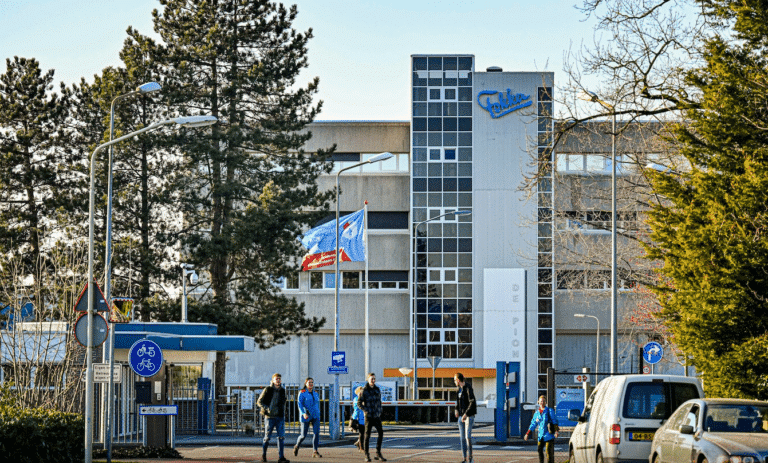
Business Park @ Aviolanda

Business Park Aviolanda houses companies and training institutes in the field of aircraft engineering and maintenance.
  • Area development

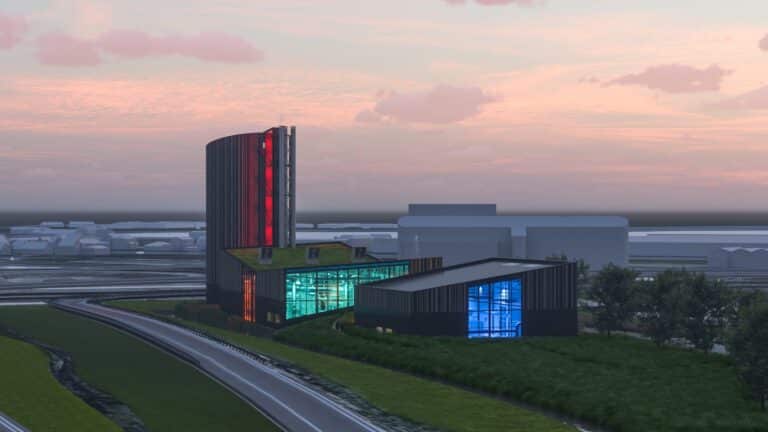
Sustainable energy use @ Croonwolter&Dros

Commissioned by Vattenfall, Croonwolter&Dros is realizing the heat station “De Sleutel” (The Key) near Leiden, alongside
  • Energy transition
  • Technologie en innovatie
  • Technology and Innovation

Lighting and Traffic Management Systems @ Vialis

Since October 1st, 2021, Vialis, commissioned by Rijkswaterstaat, has been replacing various technical systems under the

  • Technologie en innovatie
  • Technology and Innovation

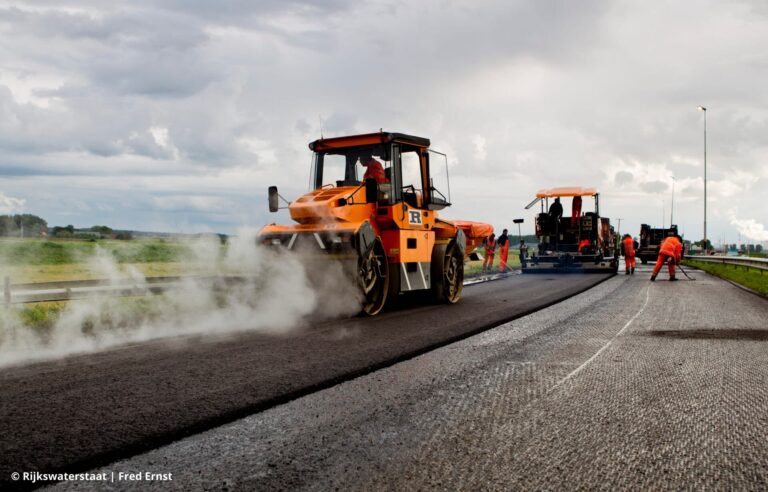
Road maintenance in the eastern Netherlands @ Haskoning

To keep the national roads of the East Netherlands district (ON) in optimal condition, Rijkswaterstaat (RWS), through it

  • Technologie en innovatie
  • Technology and Innovation

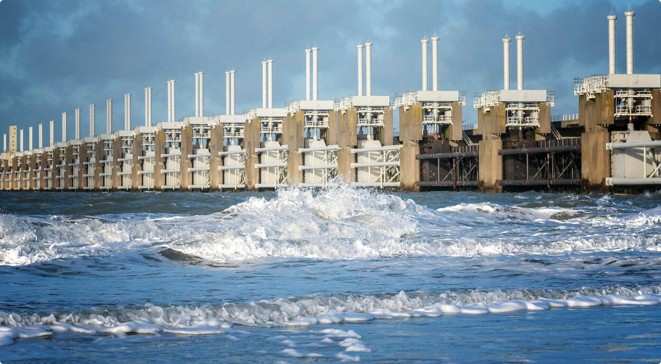
Oosterscheldekering hydraulic installations @ Hollandia

Hollandia Services is working on the Oosterscheldekering to renovate the hydraulic installations, which are essential fo

  • Technologie en innovatie
  • Technology and Innovation

Business Park Aviolanda

Business Park Aviolanda houses companies and training institutes in the field of aircraft engineering and maintenance. One of the buildings on the site no longer met current requirements and needed to be renovated and modernized so that it could be used in a future-proof manner.

A renovation of this magnitude requires a carefully substantiated project plan that takes into account costs, planning, and the necessary resources. Only with a realistic and well-coordinated approach can lead times and costs be kept under control.

Why was BAEKEN needed?

BAEKEN was involved in bringing structure and predictability to the renovation planning. During the renovation, the current user had to be temporarily relocated and housed elsewhere. This entailed considerable additional costs, making the total lead time of the renovation a critical success factor.

A short but realistic renovation period was essential to limit these costs. BAEKEN therefore played a central role in drawing up a structured and feasible plan, aimed at implementing the project as efficiently as possible.

How did we approach this project?

  1. Quantitative analysis of the renovation plans

    The renovation plans had already been drawn up by the architect. Based on the demolition and renovation drawings, a quantitative analysis was carried out to gain insight into the scope of the work. This determined which parts had to be demolished and which building components would be rebuilt.

  2. Drawing up a draft overall plan

    The lead times for each activity were determined based on the quantities established. These activities were then linked together in a logical and efficient manner, resulting in an initial draft of the overall plan.

  3. Drawing up the final overall plan 

    The draft plan was coordinated with the Aviolanda team. Based on their input, optimizations and corrections were made. This resulted in a final, supported overall plan that serves as a steering tool for further implementation.

What has been used?

Work Breakdown Structure (WBS)

To structure and manage all work to be carried out.

Stakeholdermanagement

For effective coordination, clear communication, and cooperation between all parties involved.

Primavera P6

For professional planning, phasing, and project management.

Bjorn werkte mee aan dit project
Bjorn La Haije

Curious if we can do something for you? Or check out similar projects.

This field is for validation purposes and should be left unchanged.

Of bekijk andere projecten

De Knoop @ Rijksvastgoedbedrijf

When Rijksvastgoedbedrijf (RVB) acquired the former Knoop barracks in Utrecht in 2011, it had the ambition to transform

  • Area development

Sustainable energy use @ Croonwolter&Dros

Commissioned by Vattenfall, Croonwolter&Dros is realizing the heat station “De Sleutel” (The Key) near Leiden, alongside

  • Energy transition
  • Technologie en innovatie
  • Technology and Innovation

Lighting and Traffic Management Systems @ Vialis

Since October 1st, 2021, Vialis, commissioned by Rijkswaterstaat, has been replacing various technical systems under the
  • Technologie en innovatie
  • Technology and Innovation

Road maintenance in the eastern Netherlands @ Haskoning

To keep the national roads of the East Netherlands district (ON) in optimal condition, Rijkswaterstaat (RWS), through it

  • Technologie en innovatie
  • Technology and Innovation

Oosterscheldekering hydraulic installations @ Hollandia

Hollandia Services is working on the Oosterscheldekering to renovate the hydraulic installations, which are essential fo

  • Technologie en innovatie
  • Technology and Innovation

Forensic Planning for a thorough claim analysis

The Pasay Harbor reclamation involved the construction of two artificial islands in Manila Bay, an ambitious project led by Jan De Nul and Boskalis, under a FIDIC Yellow Book contract. The aim was to develop valuable land space for future economic growth, but as is often the case with large-scale projects, Pasay Harbor faced delays that led to claims. These challenges required a thorough analysis, and I was brought in as a Forensic Scheduler.

Wesley van der Burg (founder @ BAEKEN) contributed to this project while working for Primaned project consultancy, part of Eiffel Projects, prior to founding BAEKEN.

Why was Wesley needed?

The execution of Pasay Harbor was hindered by several bottlenecks: the quality of the original baseline program was insufficient, there were inconsistencies between the progress updates, and the logic in the schedules did not align with the contractual documentation. This made it difficult to conduct a thorough analysis of the project progress, creating a need to address these shortcomings. Therefore, I was asked to bring order to the situation and establish a new, consistent foundation for further project analyses.

How did I approach the project?

  1. Creating a robust baseline

    Upon arriving at the project, I began by analyzing the existing baseline schedule and progress updates, which revealed that the quality could be improved. I used these findings to develop a new, robust planning that would serve as the basis for further progress measurements and subsequent delay analyses. With this improved baseline, we could work with greater confidence, significantly enhancing the process for critical path analysis and performance. This provided a solid foundation for managing the time and scheduling aspects of the project.

  2. Thorough Forensic Analysis

    I conducted a forensic analysis of the delays incurred, which involved a comprehensive assessment of all scheduling documents, identifying the primary causes of delay, and mapping the consequences of these delays. A detailed report was prepared, describing each delay and its impact on the project milestones. This report distinguished between the responsible parties and outlined who was accountable for which overruns. It served as the basis for a formal Extension of Time claim.

  3. Improving Communication and Transparency

    In addition to the technical aspects, it was also crucial to enhance communication and transparency within the project team. By utilizing the reconstructed schedule, I ensured that everyone, from project managers to execution teams, was informed of the current status and any bottlenecks that needed to be addressed. This facilitated a streamlined approach where all parties involved shared the same expectations and could better anticipate changes.

Wat has been used?

Primavera P6

for establishing a new baseline and critical path analysis

Time-window analysis

for applying forensic planning


Benieuwd wat ik voor jouw project kan doen?
Wesley van der Burg


Curious if we can do something for you? Or check out similar projects.

This field is for validation purposes and should be left unchanged.

Of bekijk andere projecten

De Knoop @ Rijksvastgoedbedrijf

When Rijksvastgoedbedrijf (RVB) acquired the former Knoop barracks in Utrecht in 2011, it had the ambition to transform

  • Area development

Business Park @ Aviolanda

Business Park Aviolanda houses companies and training institutes in the field of aircraft engineering and maintenance.

  • Area development

Sustainable energy use @ Croonwolter&Dros

Commissioned by Vattenfall, Croonwolter&Dros is realizing the heat station “De Sleutel” (The Key) near Leiden, alongside

  • Energy transition
  • Technologie en innovatie
  • Technology and Innovation

Lighting and Traffic Management Systems @ Vialis

Since October 1st, 2021, Vialis, commissioned by Rijkswaterstaat, has been replacing various technical systems under the
  • Technologie en innovatie
  • Technology and Innovation

Road maintenance in the eastern Netherlands @ Haskoning

To keep the national roads of the East Netherlands district (ON) in optimal condition, Rijkswaterstaat (RWS), through it

  • Technologie en innovatie
  • Technology and Innovation

From department store to university building

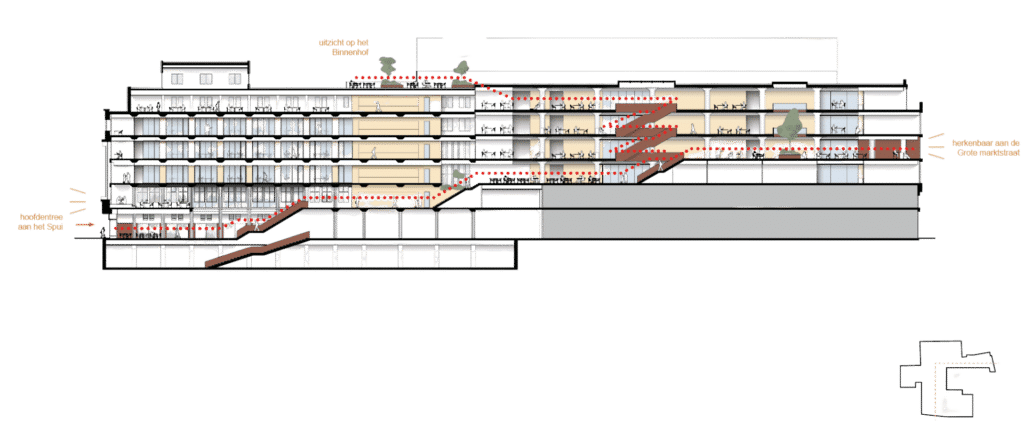
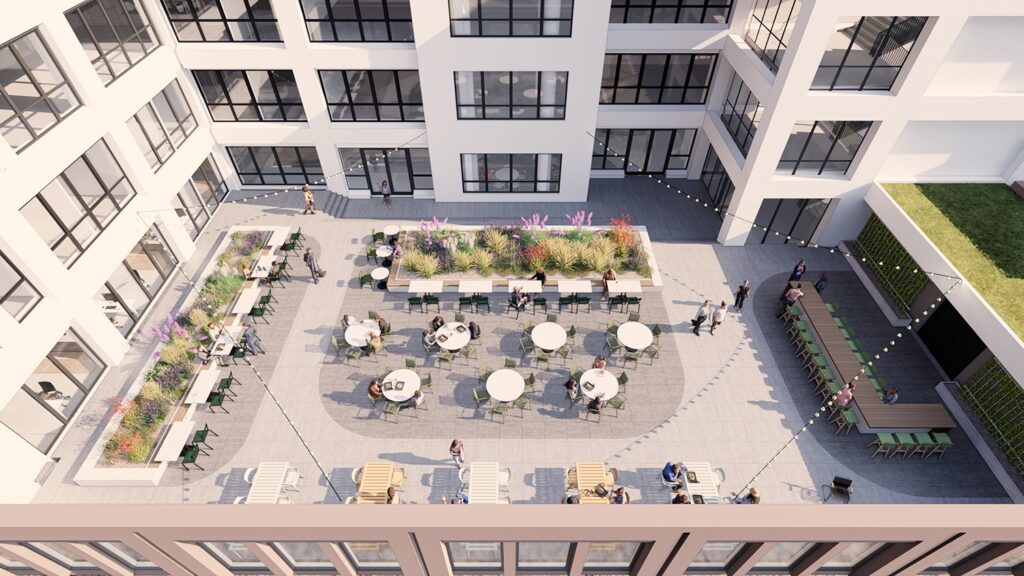
At the Spui location in the center of The Hague, Leiden University is developing a large-scale university campus. This new location, originally a department store, will host around 3,000 students and staff starting in January 2026. The renovation, which began in early 2023, is transforming the building into a modern and sustainable academic environment, designed with ample light and transparent, flexible study and workspaces.

Why was BAEKEN needed?

In this project, BAEKEN was essential to ensure the complexity and success of the construction planning. Given the scale of the renovation and the number of parties involved, there was a strong need for structured planning and effective coordination. This was crucial for identifying and addressing potential obstacles in the construction timeline and project alignment early on.

How did we approach the project?

  1. Establishing the construction schedule
    My task involved carefully drafting and managing the project planning. While Van Wijnen is responsible for the structural work, I am responsible for creating and maintaining the schedule for the interior fit-out, which is being carried out by Van der Bouw. The fit-out planning had to be meticulously aligned with the structural schedule to ensure that all tasks complement each other and the work proceeds efficiently.

  2. Ensuring coordination among the various parties
    In my role, I am the link between planning and execution, contributing to transparent and effective project controls. I ensure smooth integration of construction activities and maintain communication with the involved parties. With a keen eye for detail and progress, I strive to achieve Leiden University’s ambitious goal of creating an inspiring learning environment for future generations.

Wat has been used?

Primavera P6

for planning and project controls

Stakeholder management

for effective communication and collaboration

Benieuwd wat ik voor jouw project kan doen?
Ilana van den Akkerveken


Curious if we can do something for you? Or check out similar projects.

This field is for validation purposes and should be left unchanged.

Of bekijk andere projecten

De Knoop @ Rijksvastgoedbedrijf

When Rijksvastgoedbedrijf (RVB) acquired the former Knoop barracks in Utrecht in 2011, it had the ambition to transform

  • Area development

Business Park @ Aviolanda

Business Park Aviolanda houses companies and training institutes in the field of aircraft engineering and maintenance.

  • Area development

Sustainable energy use @ Croonwolter&Dros

Commissioned by Vattenfall, Croonwolter&Dros is realizing the heat station “De Sleutel” (The Key) near Leiden, alongside

  • Energy transition
  • Technologie en innovatie
  • Technology and Innovation

Lighting and Traffic Management Systems @ Vialis

Since October 1st, 2021, Vialis, commissioned by Rijkswaterstaat, has been replacing various technical systems under the

  • Technologie en innovatie
  • Technology and Innovation

Road maintenance in the eastern Netherlands @ Haskoning

To keep the national roads of the East Netherlands district (ON) in optimal condition, Rijkswaterstaat (RWS), through it

  • Technologie en innovatie
  • Technology and Innovation

Building together towards climate-resilient dikes

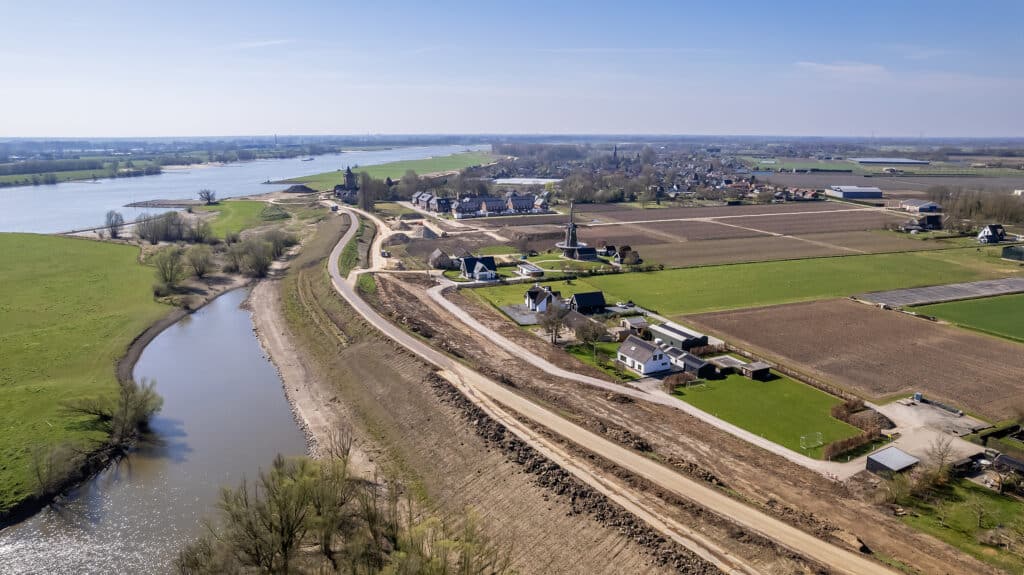
The Dike Reinforcement Tiel-Waardenburg is a crucial project within the Dutch High Water Protection Program. The project covers an area of approximately 19 kilometers between Tiel and Waardenburg and is being executed by the construction consortium Mekante Diek (Dura Vermeer, Ploegam, and Van Oord) on behalf of Waterboard Rivierenland.

Why was BAEKEN needed?

This dike reinforcement project of nearly 20 kilometers is an extremely complex project due to the adjacent Natura 2000 area, many local residents, historical sites, the changing factors, and sustainability ambitions. Forward-thinking and flexibility are therefore crucial. The project had a turbulent period with a lot of changes, which resulted in less focus on the planning as a central steering tool for decisions. I ensured that the schedule took a central position once again, becoming a steering tool that, representative of the large number of stakeholders, guided the process. Thanks to BAEKEN’s expertise, the project is not only being completed successfully from a technical perspective, but it is also making the most of sustainable innovations, ensuring the project is realized in a future-proof manner.

How did we approach the project?

  1. Introduction to the schedule and stakeholders
    Building a good relationship with the teams and stakeholders is crucial, as mutual trust leads to open communication and collaboration. In the initial phase, I ensure that I closely collaborate with the various teams, ask questions, and work alongside them to gain insight into the project’s approach. This allows me to use the schedule as a reliable steering tool that is supported by everyone.

  2. Establishing structure in communication and progress
    One of the biggest challenges in this project was that due to a period with many changes in the project, the support for the schedule was lost for the operational team and the planning was not central anymore in guiding the construction phase. My focus was on structuring communication and progress reports, making the status of the project clear to everyone involved. This not only improved transparency but also strengthened the collaboration between construction and planning. As a result, the schedule regained a central role in decision-making.

  3. Planning with flexibility and insight into risks
    In addition to regularly updating the schedule, I integrated a recurring risk analysis. This enabled us to proactively identify risks and create buffer space within the schedule. With this approach, we could not only closely monitor progress but also respond flexibly to unexpected changes, resulting in minimal delays and a smooth execution of the project.

  4. A dynamic schedule focused on the future
    As the project progressed, I integrated the schedule into the organizational and information structure. By developing scenarios based on risks and future uncertainties, the schedule evolved into a strategic tool. This approach allows us to manage the project not only in the short term but also to remain prepared for unpredictable, impactful circumstances. This resulted in greater control and flexibility, enabling the project to remain successful even in changing situations.

What has been used?

Oracle Primavera Cloud (OPC)

for planning and project controls

Risk management

for managing project uncertainties

Oracle Primavera Risk Analysis (OPRA)

for execution of complicated risk analysis

PowerBI

for visualization of data

Stakeholder management

For effective communication and collaboration

Benieuwd wat ik voor jouw project kan doen?

Curious if we can do something for you? Or check out similar projects.

This field is for validation purposes and should be left unchanged.

Of bekijk andere projecten

De Knoop @ Rijksvastgoedbedrijf

When Rijksvastgoedbedrijf (RVB) acquired the former Knoop barracks in Utrecht in 2011, it had the ambition to transform

  • Area development

Business Park @ Aviolanda

Business Park Aviolanda houses companies and training institutes in the field of aircraft engineering and maintenance.

  • Area development

Sustainable energy use @ Croonwolter&Dros

Commissioned by Vattenfall, Croonwolter&Dros is realizing the heat station “De Sleutel” (The Key) near Leiden, alongside

  • Energy transition
  • Technologie en innovatie
  • Technology and Innovation

Lighting and Traffic Management Systems @ Vialis

Since October 1st, 2021, Vialis, commissioned by Rijkswaterstaat, has been replacing various technical systems under the

  • Technologie en innovatie
  • Technology and Innovation

Road maintenance in the eastern Netherlands @ Haskoning

To keep the national roads of the East Netherlands district (ON) in optimal condition, Rijkswaterstaat (RWS), through it

  • Technologie en innovatie
  • Technology and Innovation